Chasing Z’s

Sleep is an elusive and unpredictable bitch that switches up the timing of her escape between very late at night and much too early in the morning.  She requires that I court her all day long in order to gain a slim possibility of a rare eight-hour stretch that will leave me feeling like I won the lottery.  At least once a week I see or hear the sleep courtship rules that we have all memorized by now.  The advice to not drink caffeine or exercise late in the evening is like receiving instructions on how to tie my shoes at this point.  The only reason I continue to tune in is my hope for a new fix, just as I continue to read money-saving articles in hopes of something other than the advice to skip $5 lattes.  Note Starbucks’ success and the public’s tendency to follow that advice.

The number of adults that report trouble falling and staying asleep is on the rise, with approximately 17% reporting severe insomnia.  Ironically, as we become increasingly stimulated we are getting less rest.  The primary cause, however, is that the hypothalamus gland begins decreasing production of the human growth hormone associated with deep sleep in one’s early 30’s.  Peak production in the teenage years was responsible for those dreamy days of sleeping well into the afternoon (sigh).  I wonder if it is our body’s way of telling us that the older we get the less time we have to waste.I would love to wage an argument, but have learned that my body does not alter its’ course no matter how valid my debate is. A new study states that 80% of women report feeling too stressed or worried to fall asleep and 30% are now taking sleep aids.  According to IMS Health, a pharmaceutical intelligence agency, nearly double the number of women aged 40 to 59 were prescribed sleep medications than men in the same age group.  Perhaps this “intelligence agency” is somehow sabotaging our hypothalamus so that women do not take over the world…probably not, but that term makes me paranoid nonetheless.  The most prescribed sleep aid is Ambien.  I took Ambien for a year and it was very effective; knocked me out within 5 minutes.  The only side effect I experienced was sleep walking and eating snacks.  Potato chips were my sleep eating choice, but because I loved the deep Ambien slumber I ignored the chip evidence until I was busted.  During a visit my daughter and son-in-law witnessed me walk to the cabinet, grab the chips, and munch away on the couch with my eyes closed.  Of course they were laughing and asking me questions, but it seems my sleeping self was very focused on the chips.  Lucky for all of us, I had heard about the possibility of sleep walking, eating, and even driving, and always slept in pajamas.  I became afraid of what else I may be doing while asleep and night sweats began to make pajamas unbearable, so I weaned myself off Ambien with the help of Benadryl.  My doctor preferred that I try Trazadone over the Benadryl and although it is not nearly as effective as Ambien, it does make me drowsy enough to fall asleep by midnight most nights.  D.H. Lawrence expertly and lovingly described a night-long sleep:  And if tonight my soul may find her peace in sleep, and sink in good oblivion, and in the morning wake like a new-opened flower then I have been dipped again in God, and new-created.  Good night.

Forget about it

Coupled with my Monet-like vision, my hit-and-miss memory makes finding my glasses a frustratingly blind scavenger hunt.  I have adjusted to allow for memory lapses because that is what we humans do.  We work with what we have.  So, I have a designated finder pair of glasses that reside on my dresser.  Sometimes I just have to wear the finder pair if I left my others in an especially well-hidden spot.  In perimenopause an addled thought process is sometimes what we have to work with as waxing and waning estrogen levels that are essential to neurotransmitter and oxygen levels in the brain fluctuate.  Some days I am sharp and can remember and carry out a multitude of detailed tasks that leave me feeling damn good about myself and rather smart.  Other days I am scattered, have to wear my finder glasses, and return to the grocery store for the detergent that I left in the cart.  Adding to my brain drain is the shame of not being on top of my game which is stress-producing for my Wonder Woman alter ego.  Stress, or the inevitable cortisol dump that accompanies it, actually shuts down learning and negatively affects the hippocampus, the memory center.

When my Grandma began showing signs of dementia a couple of years before she died I researched what we could do to make her life less frustrating.  I never thought I would soon employ some of those strategies in order to fake out Wonder Woman fans.  I also use the strategies I learned when placed under increasing pressure to do more and more at work, a common theme in today’s workplace.  I completed a Franklin Covey course titled “FOCUS, Achieving Your Highest Priorities” that seemed tailor-made for my planning/controlling nature.  There is truth to the adage that writing something down gives it POWER and planning requires writing it down.  Working in medical education I became addicted to studies.  Prove it to me; give me some stats or metrics.  Smooth Operators no longer hold sway here in the 5th decade.  So naturally I believe the hundreds of studies that show that multitasking is an inefficient illusion which makes for costly and time-consuming mistakes.  We all know someone who moves at break-neck speed and radiates anxiety, but is not very effective.  I am the friend that has no problem saying, “slow the hell down and identify what is crucial for you to accomplish today”.  The downside is that people get pissed when they are running around while I am calmly asking for identification of priorities.  My satisfaction is that I never spent an hour hunting for pencils the morning of a national inservice exam.  Wonder Woman always keeps her pencils in the same spot because it is a stupid thing to spend time on.  “A place for everything and everything in its place” may seem contradictory for a creative person, but if I spent my time hunting for tools I would have little time to create.

Here are a few other strategies that maximize my unreliable memory and help me focus:

  • Identify the most important goals for a month and work backwards in weekly, and then daily increments and make to-do lists.  Do not forget relationships on these lists.  Just don’t let your husband see that you penciled him in on Wednesday evening.
  • If something unexpected comes up (and when doesn’t it), think about what day’s list it can go on.  Someone freaking out does not necessarily mean it becomes your priority.  Sick kids trump everything, though.  Don’t sweat it.  Rework your lists and try to delegate where possible.
  • Never go to the grocery store without a list that was generated from a menu.  Poll the family while you are making the grocery list and only go off the list if it involves chocolate.
  • Pay with cash.  Not only will you spend less, but you do not have to keep track of several debits, just one withdrawal.
  • Do one thing at a time.  A person who works sequentially is 50% more productive and makes 50% fewer mistakes.  Time is a commodity!
  • Take a five-minute break once per hour to stretch, move about, or talk to someone you like.  Movement sends more oxygen to the brain and restarts the recall center.  You get a good feeling when interacting with someone you like because the brain is dumping those enjoyable hormones like serotonin and dopamine.

Interestingly, Our Bodies Ourselves, the book that granted us the power of knowing where our clitoris resides, just celebrated its 40th anniversary.  This monumental book granted women permission to discuss the taboo subjects of our sexuality by giving us the power of knowledge.  While young women today are prepared for menstruation and openly discuss sex and birth control with their mothers, we still have a long way to go on ridding ourselves of the taboo associated with mid-life female changes.  We have seen the effect of open dialogue and being able to call a vagina a vagina.  In that vein, I welcome you to share some of your strategies for adjusting or minimizing the changes before and during menopause.  If you find yourself trying to put it in what you think of as acceptable terms, just say out loud, “clitoris, vagina, penis, orgasm”.

Night sweating the bed

Jolting awake in the middle of the night sopping wet and chilled is an uncomfortably shameful situation that I thought was buried in my childhood.  I stopped peeing in the bed when I was six, so what the hell was this all about?  The hormonal changes during the fifth decade often cause flashbacks to my childhood, with night sweats at the top of the retro playlist.  Initially I was confused, not attributing my drenched t-shirts, pillows, and sheets to hot flashes because I was not hot, but wet and cold when I awoke.  The same friend that taught me how to use a
tampon 3 decades ago filled me in on the hot flashes that are termed “night sweats”, and occur when I am asleep.  I would be a bumbling idiot of a woman if not for my girlfriends and my Mom.

I did not make a doctor’s appointment to discuss this new development due to totally illogical embarrassment, perhaps a leftover from my peeing in the bed years.  I felt lucky that I was not “flashing” during the day, a perfect term for turning as red as a tomato and pouring sweat in front of witnesses that do not love you.  You may as well be wearing a sign that says, “Menopause, or close to it.  BEWARE!!!” in flashing
lights.  If I begin to have hot flashes that are anything like night sweats I will need to secure a towel to my belt so as not to leave a trail.  The closest I came to needing a towel was at a national conference where I was speaking.  Anxiety was clearly a trigger, and luckily I could run up to my room to change shirts periodically.  I woke every night that week cursing the luxurious down comforter that had lulled me to sleep.  Those few nights were the only times I woke up on fire because the flashes were prolonged.
When estrogen decreases, the hypothalamus steps up production of norepinephrine, a stress hormone that acts directly on the thermo-regulatory center of the brain.  Studies have shown that internal stress, an individual’s perception of life, and external stress
such as overwork and insufficient sleep, exacerbate hot flashes.

The altering effect of meditative relaxation and physical exercise on brain chemistry becomes more essential the further I journey into the 5th decade.  Between the mindfulness exercises that I learned at Mary Free Bed Pain Center and Belleruth Naparstek’s guided imagery exercises I can boost my DHEA (dehydroepiandrosterone) level and counter the increase of stress hormones.  I have focused on stress reduction techniques because anxiety is my most influential trigger for perimenopause symptoms.  The adrenal glands produce DHEA which can be promoted by “learning to think with your heart.”  It is similar to redirecting a toddler’s focus when they want something they cannot have.  Through practice I have learned to acknowledge what I feel anxious about, whether I have any control over the situation (usually not, hence the anxiety), and then refocus on something good in my life such as my family or a good memory.  It seems to put my life in a more balanced perspective and typically reminds me of what I deem important and what I do not.  One of the rewards of this practice is
witnessing the frustration of someone who is deliberately trying to provoke a stress response; it sort of freaks them out.  But, reduced night sweats and serenity must fall under the “living well” category in the common quote about revenge and are even better payoffs.  Other strategies to alleviate night sweats that have worked for me are: avoiding coffee after Noon, reducing alcohol consumption (drunk = guaranteed night sweats), eating fresh food and protein, and getting eight hours of sleep.  Interestingly, fasting and cleansing programs can weaken your adrenal system, which lowers hormone production.

I have discussed my night sweats and other perimenopause symptoms with my doctor who has offered to test  my hormone levels after I attempt to boost production with lifestyle changes.  He assures me that women today do not have to endure this decade in misery, and that in itself changes negative feelings that are woven into my understanding of hormonal changes during this time of life.  By paying attention (mindfullness) to what I consume and how I think I can lessen the impact of decreasing hormones, but it is comforting to know that my doc has a backup plan.  And comfort is the key.


Womanhood Ch-ch-ch-changes

The inconveniences of womanhood are enhanced in the 5th decade.  A few are familiar from a long time ago.  The hard painful cramping that accompanies my period reminds me of when I was 15 years old, yet now there is an end in sight.  Perhaps this is designed so that I will not miss it when menopause arrives, like the post-menopausal women who smile when they say, “I don’t have to deal with that anymore”.  Another similarity is that it always arrives at an inopportune moment, usually when I am wearing light-colored pants, busy, and away from home.  The difference is that it can arrive anytime, even if it was just here a few days ago.  Thanks to the excessive flow, I know how my Mom felt when she had to wash my sheets several times within a week.  I am stoic at this age however, and no longer believe that I may die from the pain as I did when I was a woman-child.  A few years ago I listened to an emergency room nurse chuckling as she talked about a young woman who rated her menstrual cramps as 10 on the 1-10 pain scale.  I felt sympahty for that girl because I remember feeling the same.

The drama queen of my younger years re-emerges the week before, but now I am embarrassed and guilty when I have acted like an out-of-control hormonal teenager.  If you read through a month of my blog postings, I bet you can pick out which week it
is.  I have tried taking birth control pills to regulate my crazy perimenopausal hormones, but they just made me more emotional, so I figure I will save the hormones for when I go truly mad.  In the meantime I try to be aware in order to control my emotional state and apologize often because being aware does not mean I am in control.

I was famous in my teens for my ability to pee quickly or more accurately for my penchant to pee in places that you should not, so I had to go quickly.  In a public bathroom with my daughter recently I could not help but notice that I was still peeing  while she had finished, washed her hands, and left.  It dawned on me that this is something else that has slowed down over the past few years.  Fortunately Cosmopolitan magazine schooled my teenage friends and me on the mechanics of Kegel exercises, although the reasons we learned them had nothing to do with avoiding incontinence later in life. Whatever my initial motivation was, I am a pro after 25 years of working those pelvic muscles.  Yet it still takes me a few minutes, so peeing on the side of the road is out of the question now.

I will save some of the other changes I am experiencing in my 40’s for other postings because some are so special they deserve their very own post.  It feels as though the past 30 years of being a woman have been sort of like boot camp for this – the most challenging decade yet.

Positioning Myself

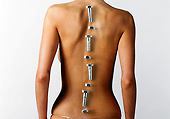
Good body mechanics have been added to my bank of new talents since I turned 40.  Bending at the knees
when lifting a heavy object is second nature, but in this decade I can hurt myself by picking up a gum wrapper.  Before I go any further I must tell you that I did NOT attend medical school, therefore I use layman’s terms and anecdotes to share what I have learned about
the importance of how we position ourselves while performing the simple acts of
daily living.  I learned these strategies just as most people do, after years of wear and tear caused me pain.  “I have no idea what I did”, is a common statement amongst my peers when they have neck and back pain, so I know that I am not alone.

Beyond “sit up straight” there are simple rules I adopted that have nothing to do with how I reflect on my mother, but everything to do with pain avoidance.  A pinched nerve lasts well-beyond the seconds it takes for a Mom’s pinch to fade, and often requires
medical treatment.  The most important lesson I have learned from a lifetime of bruises on my knees, hips, and elbows is to slow down.  I only hit tables and door jambs with my body when I am moving at break-neck speed, the accepted speed limit for women.  Moving into the slow lane is not only safer, but I get better results from whatever I am working on.  Multi-tasking is an art that I have trashed for the same reason that I do not answer my cell phone while driving; only emergent situations require either.

Here are a few simple movements and strategies that I have incorporated into my safer daily living routine:

  • When rising from bed I begin from lying on my side with my knees slightly bent and aligned with my trunk.  I use my arms to raise my body without twisting and then move to get out of bed.  This way I am not using my back and neck muscles to raise my body weight.
  • I try hard not to cross my legs because it misaligns the spine.  This is one of
    those unconscious habits drilled into me during toddlerhood by my Grandmother
    under the “young ladies should always” heading.  I have not overcome it entirely, but uncross my legs or ankles often.
  • Looking down puts a lot of pressure on our neck muscles.  Computer monitors placed at eye level as well as reading material placed higher and closer lessens the muscle load on my neck.  My dad has an adjustable book reading table which enables him to read the large hard-cover tomes he prefers without having to hold up ten pounds.
  • I eyed the gum wrapper on the floor in the rear of my vehicle and twisted then stretched to reach it.  Bad move; it caused a tweak in my back with pain that lasted for weeks.  It is better to pick up ANYTHING from a straight on and close position.  If it is low, I bend at the knees, even for something as light as a piece of paper.
  • I never hold the phone between my neck and shoulder anymore.  This bad habit paired with long mother-daughter conversations pinched a nerve in my neck which
    necessitated physical therapy.  A phone headset is optimal because the mother-daughter conversations are not optional.
  • I push rather than pull whenever possible and always face the load if I need to pull. When vacuuming, sweeping, or raking I walk with the tool I am using rather
    than pushing it far away and using my arms to pull it toward me.
  • Rather than assuming my Wonder Woman persona, I ask for help to move objects over 20 lbs. That is what husbands are for.  Boyfriends, teenagers, and friendly neighbors can help you with this, too.
  • I get close to the cabinet when putting away dishes and step up on something stable to avoid reaching far overhead.
  • I sort and fold laundry from a table or bed so that I am not bending to the floor or dryer repeatedly. If I do bend it is at the knees, rather than the waist.
  • I am usually aware of the floor surface where I am walking.  Is it slippery or wet?  Are there throw rugs or small steps?
  • I carry tension in my neck and shoulder muscles, so try to consciously lower my shoulders and open my chest when sitting or standing still.  This will also help me
    avoid the stooped shoulders I see often in older folks.
  • We blink less often when looking at a computer or reading material.  Blinking often
    helps to keep the eyes moist.  Focusing on something 20 feet away every 15 minutes helps to relieve eye strain.
  • Rising from my desk and walking around for a few minutes every hour helps me avoid that stiff feeling in my knees.

Proper body mechanics have taught me that back and neck pain is not entirely unavoidable after 40.  Once again, it has been worth learning something new in order to live the way I want, as capably and comfortably as I can.  If you are interested in learning more about proper body mechanics, I recommend talking with your doctor about occupational therapy.

Disease roulette

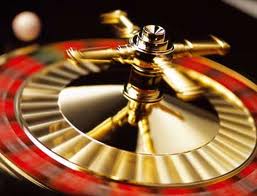
It seems that health becomes more of a gamble and the stakes become higher as we age.  I know women who have been dealt breast cancer, cervical cancer, lung cancer, diverticulitis, high blood pressure, high cholesterol, fibromyalgia, bursitis, and a myriad of other diseases that are not easily discarded.  The ball on my disease roulette wheel landed on Rheumatoid Arthritis when I was 40.  That is not to say that the wheel was not given another spin, but unlike actual roulette, I pray that it never stops again.

The strategies to play through health conditions vary from all out battle to acceptance depending on the ante.  Never a patient person, my go-to strategy was battle.  I learned everything I could about rheumatoid arthritis with a primary focus on treatments because I was determined to beat my disease.  When I suffered flare ups and could not function as my alter ego Wonder Woman, I felt betrayed by my body.  Many of us enjoy control.  I was addicted to it.  My performance and discipline had reaped me generous winnings, making it extremely difficult to change my strategy.   Losses continued to chip away at my bank of self-esteem until I accepted that rheumatoid arthritis is not my enemy, nor does it define me.  RA is part of who I am and I am valuable, although I need another alter ego/mascot.

Winners know that the table changes when a new player arrives.  Many women must learn to play a new hand of nutrition, exercise, meditation, chemotherapy and radiation, risky pharmaceutical remedies, or riskier alternative methods with the arrival of a
life-altering disease and/or chronic condition.  I was fortunate that my rheumatologist prescribed a pain management program at Mary Free Bed Pain Center where I learned to optimize my play with the help of an occupational therapist, a physical therapist, a physician, and a psychologist.  I went there feeling broken, damaged and not in control.  During my therapy I learned coping mechanisms and body mechanics that I use to feel as good as I possibly can, thereby giving me back some of the control I crave.   I went all in by requesting help both at work and at home and by redefining life’s boundaries within what is conducive to managing my RA well.  The kindness I showed myself has put winnings back in my self-esteem bank, although the play is at an intermediate level now and my losses seem greater if I fall into my old habits.  If or when the disease roulette wheel stops again, I will adjust my play in order to live my most valuable life.  My wish for anyone reading this is that you find a winning strategy for whichever health condition the wheel stops on for you.